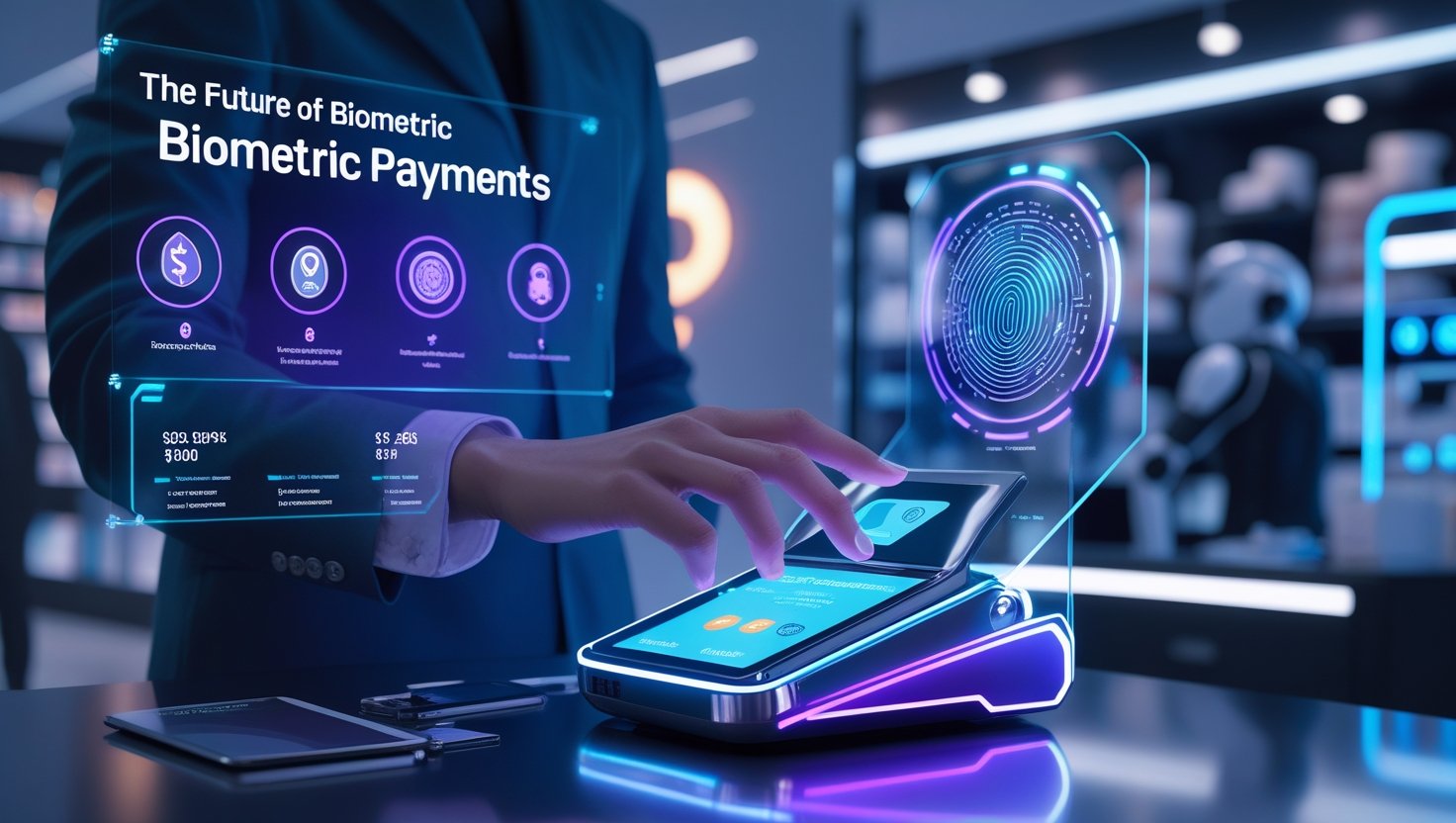
Nowadays, technology has made payment systems very advanced, and biometric payments are a part of this advancement. Biometric payments mean that you can authorize any transaction using your physical identity, i.e., fingerprint, face scan, iris scan, or voice. This method is very different from traditional PIN passwords or cards and provides more convenience and security to people. Earlier, people had to remember their wallet or card; now, payment is done just with the help of a finger or face. The idea of biometric payments is relatively new, but it has quickly made its place in the banking and retail industries. This technology uses artificial intelligence and secure databases where your biometric data is stored in encrypted form. Store, and when you make a transaction, your identity is verified instantly.
The purpose of the Introduction is to tell that biometric payments are not just a luxury but are going to become a necessity in the times to come New devices and payment terminals are entering the market every day which are accelerating this trend This system not only reduces fraud and hacking but also creates a fast and hassle-free experience for the users People’s trust is also increasing and due to this banks and businesses are also adopting it So the future of this technology is very promising and everyone should understand its basics.
How Biometric Payment Systems Work:
Understanding the way biometric payment systems work is not as difficult as people think. First of all, when you use a biometric payment system, your biometric data, i.e., fingerprint scan, face scan, or voice sample, is stored in a secure database. Whenever you make a payment in a store or online, first of, the system first asks for biometric input from you. For example, if you are using a card with a fingerprint, you have to place your finger as soon as you swipe the card. If you are making a mobile payment, Face ID or an iris scan is used. Then the system compares your biometric input with previously stored data in real time, and if everything matches, the transaction gets approved.
If not, the payment gets rejected. This reduces the chances of fraud drastically. In this entire process, artificial intelligence and encryption are very strong, so it is difficult for a hacker to steal the data. A biometric payment system creates ease and security for the user at every level. Banks and payment providers keep this data in centralized secure servers where strict privacy rules are followed. This system promotes cashless and cardless payments and creates a modern and secure experience for the people. In the times to come, AI and machine learning will make it even smarter, due to which real-time fraud detection and fast verification will become possible, and people will be able to use it without any fear.
Current Trends and Examples of Biometric Payments:
These days, the trend of biometric payments is gaining momentum, and in many countries, this technology is being used in everyday life. The most famous example is Apple Pay’s Face ID, where people scan their face and make payments in seconds. Similarly, Samsung and Google Pay have also integrated fingerprint and face recognition in their wallets. Fingerprint-enabled debit and credit cards have also been introduced in some countries where you just swipe the card, put your finger, and the payment is done instantly. Contactless biometric payment terminals have started being installed in retail stores, supermarkets, and even coffee shops, where you don’t need cash or a card, just a biometric scan, and it works.
Many airports and metro stations, too. We are testing a biometric fare payment system where a traveler’s face scan or fingerprint will be useful for getting the ticket. The biggest reason for the popularity of this trend is convenience, and the other big reason is fraud prevention. People feel that it is difficult to hack the biometric data, hence the trust is increasing. Many companies in Asia, Europe, and North America are investing in this trend, and fintech startups are also bringing new biometric ideas like palm vein scan or voice payment. All these examples are proof of the fact that biometric payments are not just a short-term trend but are a part of the long-term payment revolution.
Benefits of Biometric Payments for Consumers and Businesses:
Biometric payments have many benefits that are very valuable for both consumers and businesses. The biggest benefit is security, as it is very difficult to copy or steal biometric data. Therefore, the risk of credit card fraud, identity theft, and unauthorized transactions is greatly reduced. Another benefit is speed, as in biometric payments, neither PIN has to be entered nor card or cash has to be entered. Just by scanning the finger or face, the payment is done in seconds. This reduces checkout lines and makes the customer experience faster. Businesses also benefit from this as their transaction processing cost is reduced, and fraud claims are also reduced.
Biometric payments also increase brand trust when the customer feels that his identity is safe, he feels more confident, and also shops more. Apart from this, biometric payments are contactless, which is also considered a hygienic payment solution in the post-pandemic world. Companies can also customize loyalty programs and personalized offers with the help of biometric data, which improves sales and customer engagement. If seen from all sides, biometric payments are making transactions even safer, seamless, and user-friendly in the future. These benefits are the reasons that are growing this trend on a global scale and encourage every business to adopt this technology in their system.
Challenges and Security Concerns:
As beneficial as biometric payments are, it is important to understand their challenges and security concerns, too. The first challenge is to privacy. Biometric data, i.e., fingerprint, face, or iris scan, is a person’s unique identity. If this data gets leaked, it cannot be changed, unlike passwords, which you can change. The second challenge is hacking and data breaches. If biometric databases are not fully secured, they can become a tempting target for hackers. Some people do not trust AI algorithms and biometric scanning devices. They feel that their data can be misused or sold for some unauthorized purpose. Regulations and data protection laws are also weak in many countries. Yes, that is why there is also the challenge of global standardization and compliance. Infrastructure cost is also a barrier.
Installing biometric terminals and secure servers can be expensive for small businesses. Apart from this, if the biometric system fails, the customer should also have an alternative verification option; otherwise, the transaction gets rejected. Technical errors, like poor fingerprint scans or lighting issues, also create problems at times. To overcome these challenges, companies need strong encryption, robust firewalls, and regular security audits. People should be educated as to how their biometric data is being used and how it is being kept safe. If these challenges are handled timely manner, the future of biometric payments can be secure.
Conclusion:
Finally, if we look at the future, biometric payments are evolving every day, and technology experts say that it will become mainstream in some salons shortly. The dream of a cashless and cardless society can be fulfilled soon due to biometric technology. Companies are already working on face recognition, fingerprint, and palm scanning, and new hardware devices and apps are being launched. Businesses that will adopt this trend quickly will gain a competitive edge, but at the same time, they will have to follow the latest security standards to protect customer data. Users should also be responsible.
They should share their biometric data only with trusted companies and keep their devices updated in the coming times. Biometric payments will be used not just in retail or banking but also in travel, healthcare, and public services. This will save people’s time and security, and if rules and privacy standards are made strong, people’s trust will also increase. Conclusion: Biometric payments are a perfect combination of convenience, speed, and security, and if businesses and governments together make it safe and accessible, this technology can become the most reliable way of payment in the future.
FAQs:
Q1: What exactly are biometric payments?
Biometric payments are transactions where a person uses a unique physical feature—like a fingerprint, face scan, iris scan, or voice to authorize payment instead of using cash, cards, or PINs. This makes payments faster and more secure than traditional methods.
Q2: How do biometric payment systems keep my data safe?
Biometric payment systems store your biometric data in an encrypted and secure database. When you make a payment, the system matches your live scan with the stored data in real time. Strong encryption, AI, and secure servers help protect this sensitive data from hackers and misuse.
Q3: What are some examples of biometric payments in use today?
Popular examples include Apple Pay’s Face ID, Samsung and Google Pay’s fingerprint and face recognition, and fingerprint-enabled credit/debit cards. Some airports and metro stations are also testing face or fingerprint payments for tickets. Many stores now have contactless biometric terminals for quick payments.
Q4: What benefits do biometric payments offer to customers and businesses?
For customers, biometric payments mean faster checkouts, better security, and less hassle—no need to remember PINs or carry cards. For businesses, they reduce fraud, lower transaction costs, build customer trust, and create opportunities for personalized services and loyalty programs.
Q5: Are there any risks or challenges with biometric payments?
Yes, the main concerns are privacy, data leaks, and hacking. Unlike passwords, biometric traits can’t be changed if stolen. Technical failures, high setup costs, and weak regulations in some countries are also challenges. Strong security measures, good laws, and customer awareness are needed to make this system safe for everyone.