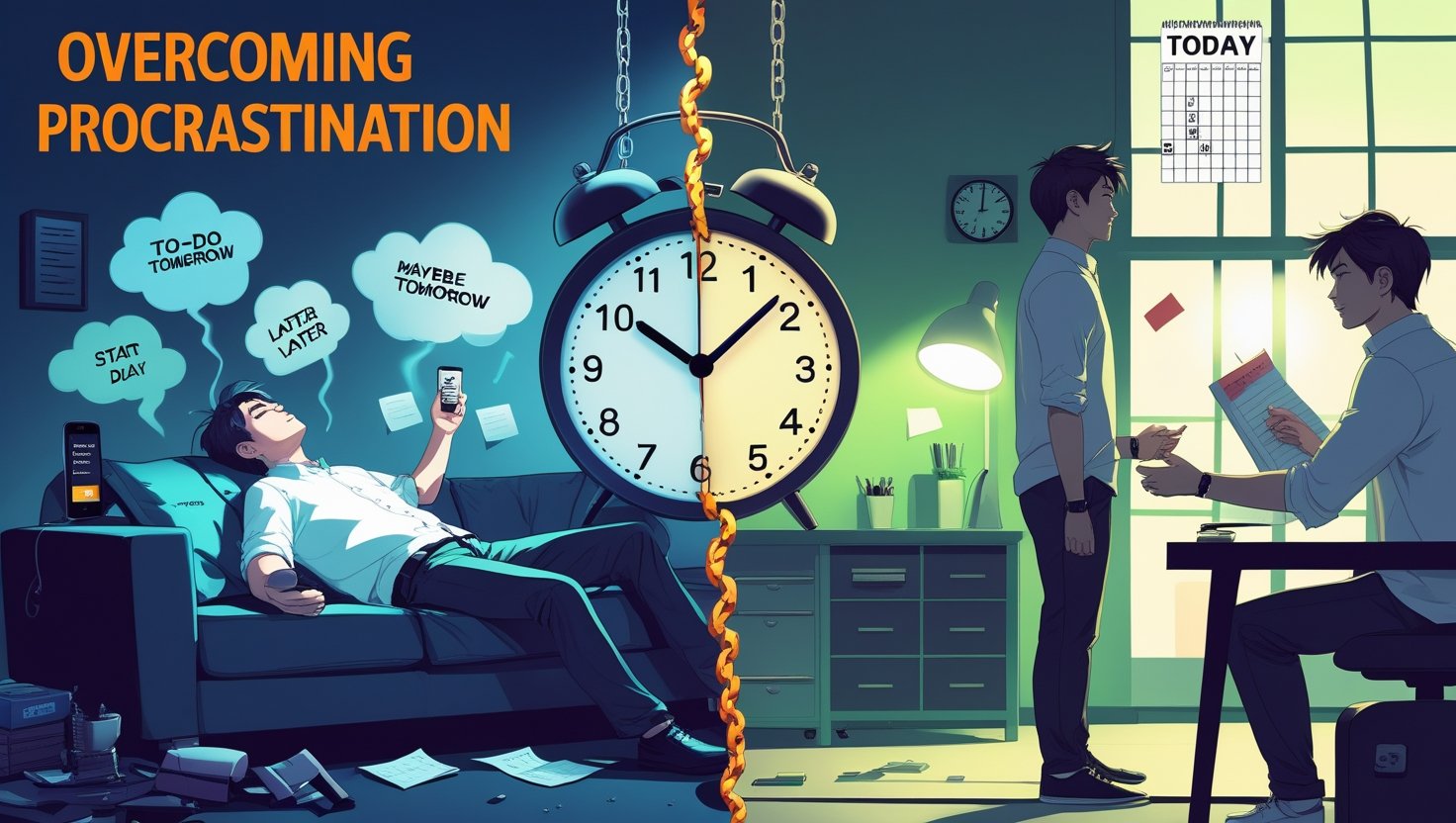
Procrastination is a habit that every person faces at some point in time. This is a habit in which we keep delaying a task instead of doing it on the scheduled time, even if we know that the task is important. Often, people consider procrastination as just a way to postpone work, but in reality, it can also be a psychological issue. When we are faced with a difficult, boring, or stressful task, our mind diverts us to something else to escape from it, like scrolling social media, doing unnecessary cleaning, or simply wasting time.
Gradually this habit becomes so strong that every time an important task comes up, we naturally start putting it off. Procrastination not only hampers productivity but also affects mental health. Stress, guilt, and anxiety are all over when the pressure of work goes on till the last minute. This not only reduces the quality of work but also reduces your confidence and self-esteem.
It is important to understand that procrastination is not laziness – rather, often people shy away from work due to perfectionism, fear of failure, or lack of motivation. But if we understand this problem and adopt some effective strategies, it can be easily overcome. This blog will help you in this journey.
Common Causes of Procrastination:
There can be many reasons behind procrastination, which are different for every person. The most common reason is fear of failure, i.e., the person lives in the fear that what will happen if he starts the work and is not able to perform well. This thought takes him away from the work. The second reason is perfectionism, some people want to make every work so perfect that they do not even start until everything becomes ideal. In this process, time is wasted, and the work remains incomplete. Lack of motivation is also a big reason. When there is no interest in a task or no benefit is seen, then one does not feel like starting it.
Distractions also play a big role in procrastination. Mobile phones, social media, games, and unnecessary activities break a person’s focus. Often, people try multitasking, but that also backfires because the work does not get completed. Lack of time management also gives rise to this issue. When we do not organize our work, everything seems overwhelming. All these factors together put a person in such a loop from which it becomes difficult to get out. But if we understand and address these causes, then procrastination can be controlled at the root level.
The Impact of Procrastination on Mental and Physical Health:
Procrastination is not just a delay in doing something, it also has a deep impact on a person’s mental and physical health. When we repeatedly postpone an important task, guilt and stress builds up inside us. This guilt can slowly turn into anxiety and even depression. Often people get angry at themselves for not being able to do the work on time, which lowers their self-esteem. This emotional stress also affects the body. Sleep disturbance, headache, body pain and fatigue are among the physical effects of procrastination. When the pressure of any work goes on till the last moment the panic mode is activated, due to which the heart rate speeds up and concentration is lost.
This cycle keeps repeating and man is not mentally prepared for every new task. Besides this, due to procrastination we move away from our goals, which is the result of frustration and disappointment. People struggle both in relationships and career because they are not able to fulfill commitments or deadlines. All these things together create such an environment where productivity and mental health both suffer. If we ignore procrastination thinking it to be just a habit of doing something, then we underestimate its psychological damage. That is why it is important to understand and treat this problem on time.
Effective Strategies to Overcome Procrastination:
Using some simple and effective strategies can prove to be very helpful in overcoming procrastination. First of all, it is important to divide the work into small steps. When a task seems small, it becomes easy to start it. Apart from this, making a daily to-do list also helps in productivity. When we write down our tasks, we get clarity in our minds and are able to prioritize them. The time blocking technique is also very useful, in which you divide your day into specific hours and fix the time for every task. It is also necessary to set deadlines and strictly implement them. For motivation, remember your goals and why you are doing the work. Positive reinforcement, such as self-reward, also encourages you.
If a task seems boring, do it with a friend or colleague so that accountability is eliminated. To avoid distractions, it is very important to keep the phone on silent mode, limit the use of social media, and create a focused environment. Finally, do not put too much pressure on yourself. Sometimes, procrastination has to be broken with small wins. If you do even one task on time every day, you are developing a positive habit. This consistency is what can get you out of procrastination in the long term.
Tools and Techniques to Stay Focused:
To increase productivity and maintain focus, there are many tools and techniques available these days that can help you. The most popular technique is the Pomodoro Technique, in which you work for 25 minutes and then take a 5-minute break. This cycle keeps you mentally fresh and reduces distractions. Apps like Trello, Notion, and Todoist are very helpful for time management. In these apps, you can assign tasks, set reminders, and track your progress. To maintain focus, an app like Forest is also used, where your digital tree grows only when you do not use your phone.
This gives motivation to stay away from the phone. The environment also affects focus, so choose a place where there is less noise and distractions are minimal. Background music can also help, but instrumental or white noise is better. Exercises like mindfulness and meditation also help in keeping the mind centered. If you meditate for 5-10 minutes every morning, your mind becomes clear and ready. Visualization and affirmations are also strong techniques that prepare you mentally. The most important thing is that you balance your routine. Too much work and too little rest both destroy focus. A combination of smart tools and simple techniques can greatly improve productivity.
Conclusion:
It is not possible to eliminate procrastination in just one day, but if we start improving our habits a little bit every day, then long-term productivity can be achieved. It is important to understand that productivity is a skill that develops over time, and it requires both patience and discipline. Every day, small victories take you towards a positive mindset. Keeping your goals clear, writing them down, and keeping an eye on them is the best source of motivation. It also helps to have a fixed routine for your work in which your mind knows what to do at what time.
This saves willpower and reduces decision fatigue. Keeping a record of your successes and taking stock of your progress also improves self-motivation. Sometimes we have to be honest with ourselves as to why we are procrastinating if the reason is emotional or mental stress, then seeking professional help is also a good step. The most important thing is to make consistency and self-discipline a part of your life. Productivity becomes natural when you become responsible for your actions. This blog is not just giving you a temporary solution, but guiding you towards a lifestyle shift where you try to become better every day. This is the beginning of real success.
FAQs:
- What is procrastination and how is it different from laziness?
Procrastination means delaying tasks despite knowing their importance, often by distracting yourself with less important activities. Unlike laziness, procrastination usually stems from fear of failure, perfectionism, or lack of motivation, not an unwillingness to work. - Why do people procrastinate even when they know a task is important?
People often procrastinate because of underlying issues like fear of failure, perfectionism, boredom, stress, or lack of interest. These emotional and psychological blocks make starting or completing a task feel overwhelming. - How does procrastination affect mental and physical health?
Procrastination can lead to stress, guilt, anxiety, and even depression. Physically, it can cause sleep problems, fatigue, headaches, and weakened immunity due to constant mental pressure and last-minute panic. - What are some effective strategies to overcome procrastination?
Breaking tasks into smaller parts, using time-blocking techniques, creating to-do lists, setting deadlines, and rewarding yourself for progress are some of the most effective ways to fight procrastination. Creating a distraction-free workspace and seeking accountability also help. - Which tools or techniques can help improve focus and productivity?
The Pomodoro Technique, productivity apps like Notion, Trello, or Forest, and practices like mindfulness and meditation are very effective. Choosing a quiet work environment and maintaining a balanced routine also boosts focus and efficiency.