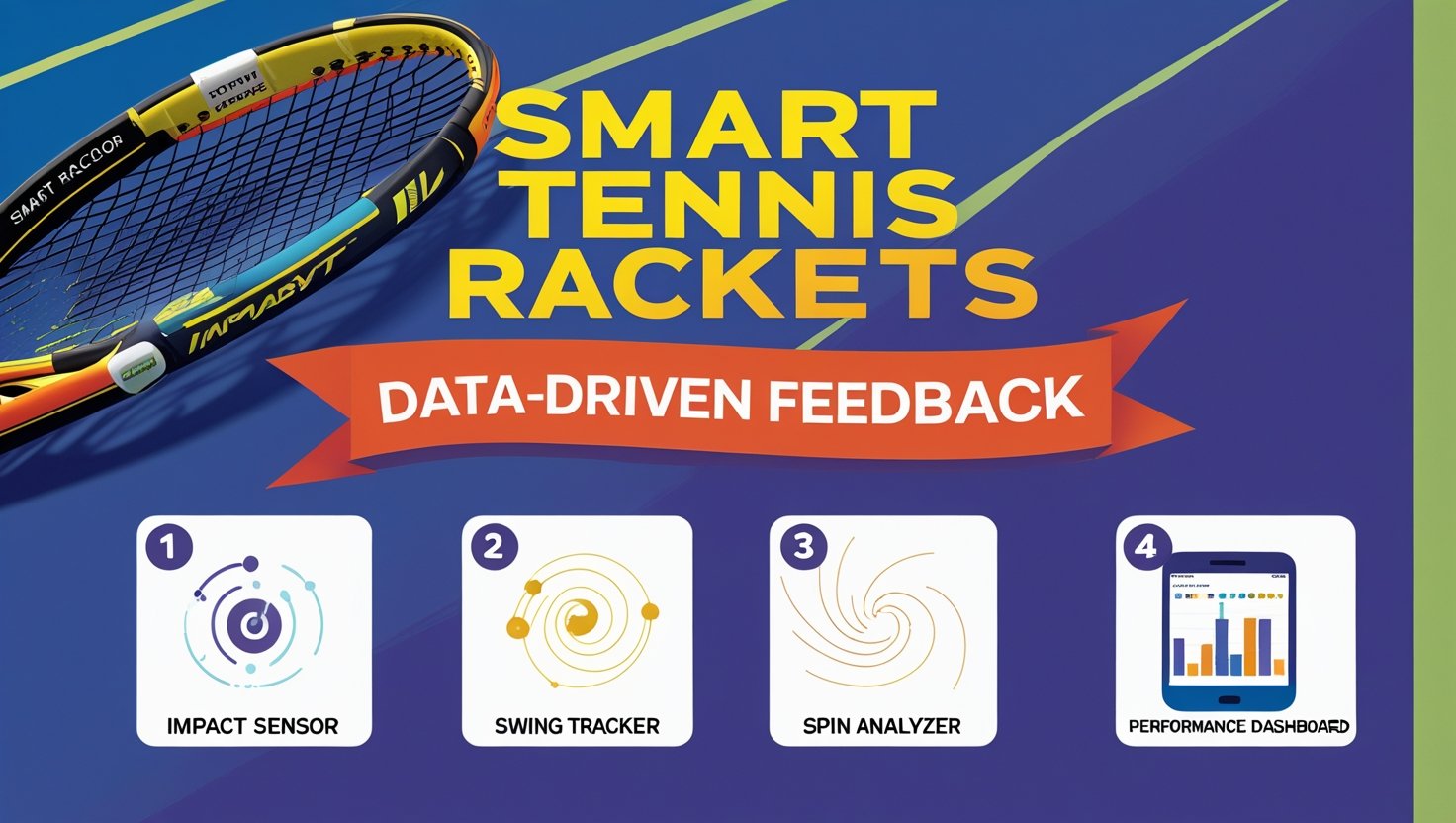
Imagine stepping onto the court not only with your trusted racket in hand but also with the power of cutting-edge analytics driving your every move. Smart Tennis Rackets equipped with Data-Driven Feedback are transforming tennis training by turning your swing into a wealth of actionable insights. Gone are the days of mere guesswork; technology now offers instant, personalized advice that refines your technique, boosts confidence, and accelerates your improvement. This article explores how modern tennis rackets integrate digital intelligence to serve as your personal coach and strategic partner on the court. Get ready to learn how this invisible engine of data can elevate your level of play and redefine your approach to the game.
Revolutionizing Your Game:
In a rapidly evolving sports landscape, innovation is the name of the game, especially when it comes to tennis. Smart Tennis Rackets represent a breakthrough in sports equipment by fusing traditional design with embedded technology. These rackets are integrated with sensors such as accelerometers, gyroscopes, and impact detectors that capture every nuance of your swing. The real magic happens when this raw data is processed into meaningful metrics, offering insights on swing speed, ball impact location, spin, and even the timing of your strokes.
By leveraging Data-Driven Feedback, these rackets provide a level of detailed analysis that was once reserved for elite athletes with access to high-tech training facilities. Now, everyday players can access professional-grade data without leaving the court. This evolution has democratized performance analysis, making it an integral part of training, from identifying technical flaws to reinforcing strong areas. The result is not only an enhanced technique but also a personalized training regimen that continually adapts to your progress. Whether you’re a beginner or an advanced player, this technology ensures that every swing becomes an opportunity to learn and improve.
Sensing the Swing:
At the heart of Smart Tennis Rackets lies a sophisticated network of sensors and integrated systems designed to capture in-game dynamics. Miniature sensors embedded within the racket measure various parameters with high precision. Accelerometers track the speed and force of your hit, while gyroscopes detect the orientation and rotation of your swing. Additionally, pressure sensors can assess the point of contact on the racket, revealing whether your shots are hitting the “sweet spot” consistently.
Each of these data points contributes to a comprehensive view of your performance. The onboard microprocessors analyze the data in real time and sync with a dedicated app or a cloud-based platform. This instantaneous processing, combined with advanced algorithms, translates raw figures into clear, actionable insights. Imagine receiving instant notifications on your smartphone that highlight whether your backhand was too fast or if your forehand lacked the necessary spin. With Data-Driven Feedback, every aspect of your swing is dissected, offering the granular details needed to fine-tune your game. This transformative technology not only empowers you with information but also helps in reducing the gap between practice sessions and match performance.
Real-Time Insights:
Data is only as powerful as the insights it provides, and that’s where Data-Driven Feedback shines. During every match or practice session, these smart rackets record crucial performance metrics. In real time, the system processes the data to deliver immediate feedback on various aspects such as shot consistency, ball speed, impact force, and spin rate. This instantaneous feedback loop transforms how you train on the court.
For example, if your serve isn’t meeting your expected speed or precision, the system can alert you immediately, highlighting the specific parameters that need adjustment. Over time, the accumulation of this data enables you to spot trends, such as a consistent drop in stroke power as fatigue sets in. These insights empower players to modify their technique, adjust their physical conditioning, and even tailor their equipment to better suit their style. The beauty of Data-Driven Feedback is its ability to translate numbers into an intuitive understanding of your game. It guides you like a virtual coach, ensuring that each practice session is focused and productive, ultimately leading to rapid improvement on the court.
The Digital Tennis Coach:
Gone are the days when players had to rely solely on the advice of a coach or their judgment. With Smart Tennis Rackets, a digital tennis coach is always by your side, offering personalized analytics that reflect your unique playing style. These smart devices integrate seamlessly with mobile apps that display detailed performance reports, historical data trends, and even customized training drills based on your statistics.
The digital platform is designed to be user-friendly and highly interactive. Graphs, charts, and heat maps visually represent your performance, making it simple to understand areas of strength and improvement. For instance, the app might show that your backhand consistently loses power compared to your forehand, or it could highlight an uneven balance in your swing. By breaking down complex metrics into digestible insights, this digital coach helps you set realistic goals and track your progress session by session. The interactivity extends beyond data; many platforms allow you to save sessions, compare performance over time, and even share results with coaches or fellow players. This dynamic platform transforms your racket into more than just sports equipment—it becomes an essential tool for mastering your technique through Data-Driven Feedback.
Customizing Your Strategy:
Every tennis player is unique, and so are the challenges they face on the court. Smart Tennis Rackets provide the flexibility to tailor feedback to your playing style. The data captured is not generic; rather, it adapts to the nuances of your game. Whether you’re an aggressive baseline hitter or a strategic serve-and-volley player, the system learns your patterns and provides feedback that is specifically relevant to you.
This personalization is achieved through advanced machine learning algorithms that analyze your swing over time. The more you play with your smart racket, the better the system becomes at understanding and predicting your needs. It can, for example, suggest adjustments to your grip or even recommend subtle changes in your swing mechanics that match your physical strengths and weaknesses. This adaptive feedback helps in optimizing your performance by ensuring that your training regimen is both efficient and effective. The iterative nature of this data-driven insight creates a continuous learning loop where every practice session refines your technique further. It is this kind of bespoke coaching that empowers players to reach new competitive heights, making Data-Driven Feedback not just an accessory but an essential extension of your athletic journey.
The Future of Tennis Training:
The integration of smart technology in tennis is just the beginning. As sensor technology and data analytics continue to evolve, the potential for Smart Tennis Rackets is enormous. Emerging trends point toward even more refined analytics, such as incorporating biometrics to monitor heart rate and muscle fatigue, or using augmented reality to overlay performance tips during live play.
The future sees these smart devices becoming more affordable, more accurate, and more deeply integrated with wearable technology and digital coaching platforms. Imagine a scenario where your racket not only tells you what went wrong after a shot but also provides real-time adjustments during practice drills. This consistent, adaptive guidance could revolutionize how you train, making each session more productive and progressively tailored to your growth. Additionally, community-driven platforms could allow players to share data, compare performance, and learn collectively, driving innovation across the sport. In this transformative era, the blend of Smart Tennis Rackets with Data-Driven Feedback will redefine competitive play, setting a new standard in how athletes prepare, perform, and perfect their game.
Conclusion:
Embracing Smart Tennis Rackets means unlocking the door to a new world where every swing is analyzed, and every play is improved. By combining advanced sensor technology with rich, Data-Driven Feedback, these rackets offer a bespoke, digital coaching experience that adapts to your style. Whether you’re chasing that perfect serve or fine-tuning your groundstrokes, this innovative blend of technology and athleticism empowers you to train smarter, play harder, and ultimately reach your full potential on the court. The future of tennis is data-driven; make sure you’re part of the revolution.
FAQs:
Q1: What are Smart Tennis Rackets?
They are tennis rackets integrated with sensors and digital technology that capture detailed metrics about your swing, providing immediate, data-driven feedback for improved performance.
Q2: How does Data-Driven Feedback enhance my tennis game?
By converting sensor data into actionable insights, it guides adjustments in your technique, tracks improvements, and helps tailor your training sessions to your specific strengths and weaknesses.
Q3: What kind of data do these smart rackets capture?
They record parameters including swing speed, ball impact location, spin, stroke consistency, and even finer details like grip pressure and movement orientation.
Q4: Can smart tennis rackets replace traditional coaching methods?
While they provide real-time, personalized insights, they work best when combined with traditional coaching to offer an even more comprehensive analysis of your game.
Q5: Are smart tennis rackets suitable for players at all levels?
Absolutely. They are beneficial for beginners aiming to improve fundamentals as well as advanced players seeking to fine-tune their performance and gain a competitive edge.
Q6: What is the future of smart tennis technology?
The future promises even more sophisticated analytics, integration with biometric data, augmented reality coaching, and greater connectivity, all designed to make training more interactive and personalized.